Functions and consequences of artificial intelligence
in the science and higher education organization
KIWIT is an interdisciplinary and inter-university research network.
Funded by the Federal Ministry for Research, Technology and Space (BMFTR).


KIWIT SPECIAL
Dahrendorf Professor Rudolf Stichweh on the occasion of a lecture on the history of the USA. (Image: Private)
AT THE LAUNCH OF KIWIT
The Multifunctionality of Interdisciplinarity
The sociologist of science and social theorist Rudolf Stichweh has devoted his entire research career to examining the role of interdisciplinarity. He has held numerous international positions and contributed to major projects. In 1984, he earned his doctorate with a dissertation on the emergence of physics as a discipline in Germany. In this contribution, Stichweh—scientific advisor to the KIWIT research group—elucidates key forms and functions of interdisciplinary work in science.
By Rudolf Stichweh
The emergence of interdisciplinarity presupposes a sufficiently large and sufficiently diverse system of scientific disciplines, in which the complexity of the relationships between these disciplines is denoted by the term “interdisciplinarity.” This condition was met in the scientific system of modernity around 1850 (Stichweh 1984), a time when new disciplines were continually emerging in the natural and human sciences. The social sciences existed only in preliminary forms—mostly as state sciences—and at the same time, the first signs of a new type of engineering sciences could be observed.
Modern Knowledge: Lateral and Dynamic
In addition to the complexity of the system of scientific disciplines, its internal dynamics are crucial. Unlike in premodern times, the modern order of knowledge is neither hierarchically structured nor organized in such a way that knowledge domains are separated and thereby immobilized. Rather, it is lateral and dynamic. Knowledge domains are related to one another and engage in interactions in which they challenge and stimulate each other, thereby setting themselves in motion.
In this world—where interdisciplinarity can be understood as another term for the environment of every discipline, shaped internally by other scientific disciplines—new forms and functions of interdisciplinarity constantly emerge. First among these are transfer and innovation: interdisciplinarity constitutes the primary mechanism for knowledge transfer and the generation of innovations within the modern scientific system. Methods, theories, and other epistemic elements are continually transferred between disciplines, triggering innovations within the disciplinary context of their reception—sometimes to such an extent that entirely new disciplines are created (Ben-David & Collins 1966).

Stichweh, R. (2013). Science, University, Professions: Sociological Analyses. Bielefeld.

Stichweh, R. (in preparation). Science, University, Professions: Sociological Analyses (Vol. 2). Bielefeld.
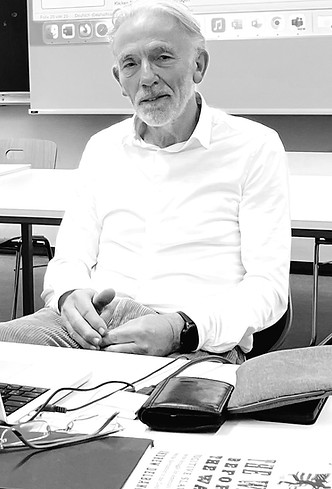
Rudolf Stichweh has established himself as a distinguished expert on the scientific system of contemporary global society. (Image: Private)
About the Author
Prof. Dr. Rudolf Stichweh, born in 1951 in Lemgo, Lippe, studied sociology and completed his doctorate in 1984 with a dissertation on the emergence of physics as a scientific discipline. He subsequently habilitated and assumed the chair of sociology at Bielefeld University as the direct successor of Niklas Luhmann, one of the most prominent representatives of systems theory. Today, Stichweh is Senior Professor of Sociology at the University of Bonn and a permanent visiting professor at the University of Lucerne, where he served as Rector from 2006 to 2010. From 2012, he has held the position of Dahrendorf Professor for the Theory of Modern Society and Director of the Forum for International Science at the University of Bonn.
His work primarily focuses on systems and social theory, the development and differentiation of modern societies, and the sociology of science and education. Stichweh has made significant contributions to the understanding of the functional differentiation of modern societies. His interdisciplinary approach allows him to transcend the boundaries of sociology, as noted by FAZ editor Jürgen Kaube on the occasion of Stichweh’s 70th birthday: “He can provide insight into biology and physics as well as sports history and literature. Yet he is, by training, a sociologist.”
He has received numerous honors and awards, including visiting professorships at Princeton University and the University of Chicago, membership in the North Rhine-Westphalian Academy of Sciences and the Leopoldina, and the George Sarton Medal for the History of Science at Ghent University. Since 2020, he has been a member of the Lise Meitner Research Group “China in the Global System of Science” at the Max Planck Institute for the History of Science in Berlin. From 2025, we are very pleased that Rudolf Stichweh will join the Scientific Advisory Board of the KIWIT research group.
[Link to Rudolf Stichweh’s website]
A second form of interdisciplinarity, competition, does not rely on transfers but takes the form of ongoing observation of one or more other disciplines by researchers within a given discipline. Researchers select their own developmental trajectory based on the observed trajectory of another discipline with which they are connected through relationships of competition or conflict. This may include individual transfers, but the core lies in choosing one’s own trajectory in light of the trajectory of other disciplines.
Cooperation and excellence constitute a third manifestation: as scientific cooperation becomes the dominant mode of work in science, interdisciplinarity increasingly occurs within individual research projects and associated publications. Researchers seek collaborative partners who contribute the capabilities and perspectives of other disciplines, and this is often necessary because reviewers of submitted projects and publications demand the consideration of complementary perspectives. Projects and publications that address complex societal challenges frequently implement interdisciplinarity in the form of multidisciplinarity.
Broadening of horizons as a hallmark of scientific education
A fourth form and function is evident in epistemological self-reflection. It arises from the self-critical impulse to relativize one’s own observations by incorporating the perspectives of other disciplines. From this viewpoint, the focus is on clarifying the epistemological conditions of one’s own observation—that is, self-reflection. This function is particularly relevant to higher education, as it links disciplinary training with interdisciplinary context. Interdisciplinarity thus constitutes a crucial component of the horizon-broadening inherent in genuine scientific education (Stichweh 2017).
Fifthly, interdisciplinarity today often functions as a norm, particularly within research-funding institutions that require interdisciplinary components in projects. Justifications for this norm can readily be found in the aforementioned forms and functions of interdisciplinarity. However, the autonomous dynamics of interdisciplinarity within the scientific system are so pronounced that one may question whether this norm is additionally necessary.
An earlier version of this contribution appeared in Wörterbuch Erwachsenen- und Weiterbildung, edited by Rolf Arnold et al. (2023), 3rd edition, Bad Heilbrunn, pp. 221–222.
References:
-
Ben-David, J., & Collins, R. (1966). Social factors in the origin of a new science: The case of psychology. American Sociological Review, 31(4), 451–465.
-
Frodeman, R. (Ed.) (2017). The Oxford handbook of interdisciplinarity. Oxford: Oxford University Press.
-
Stichweh, R. (1984). Zur Entstehung des modernen Systems wissenschaftlicher Disziplinen: Physik in Deutschland 1740–1890. Frankfurt am Main: Suhrkamp.
-
Stichweh, R. (2017). Interdisziplinarität und wissenschaftliche Bildung. In H. Kauhaus & N. Krause (Eds.), Fundiert forschen: Wissenschaftliche Bildung für Promovierende und Postdocs (pp. 181–190). Wiesbaden: Springer VS.
Within the framework of the Leopoldina Symposium “The Authority of the Sciences under Review” on November 23–24, 2023, in Halle (Saale), Rudolf Stichweh spoke about the authority and unity of science.
At the Bielefeld Center for Theories in Historical Research (ZThF), as part of the “History Cultures” colloquium, Rudolf Stichweh spoke on May 4, 2022, about the modern science system.


Research Class